Field note
Shooting Permissions in India for Indie Filmmakers: What Actually Needs Permission
A practical guide to film shooting permission in India: public places, private property, police intimations, drones and the Northeast-specific notes that save a small crew from a stopped shoot.
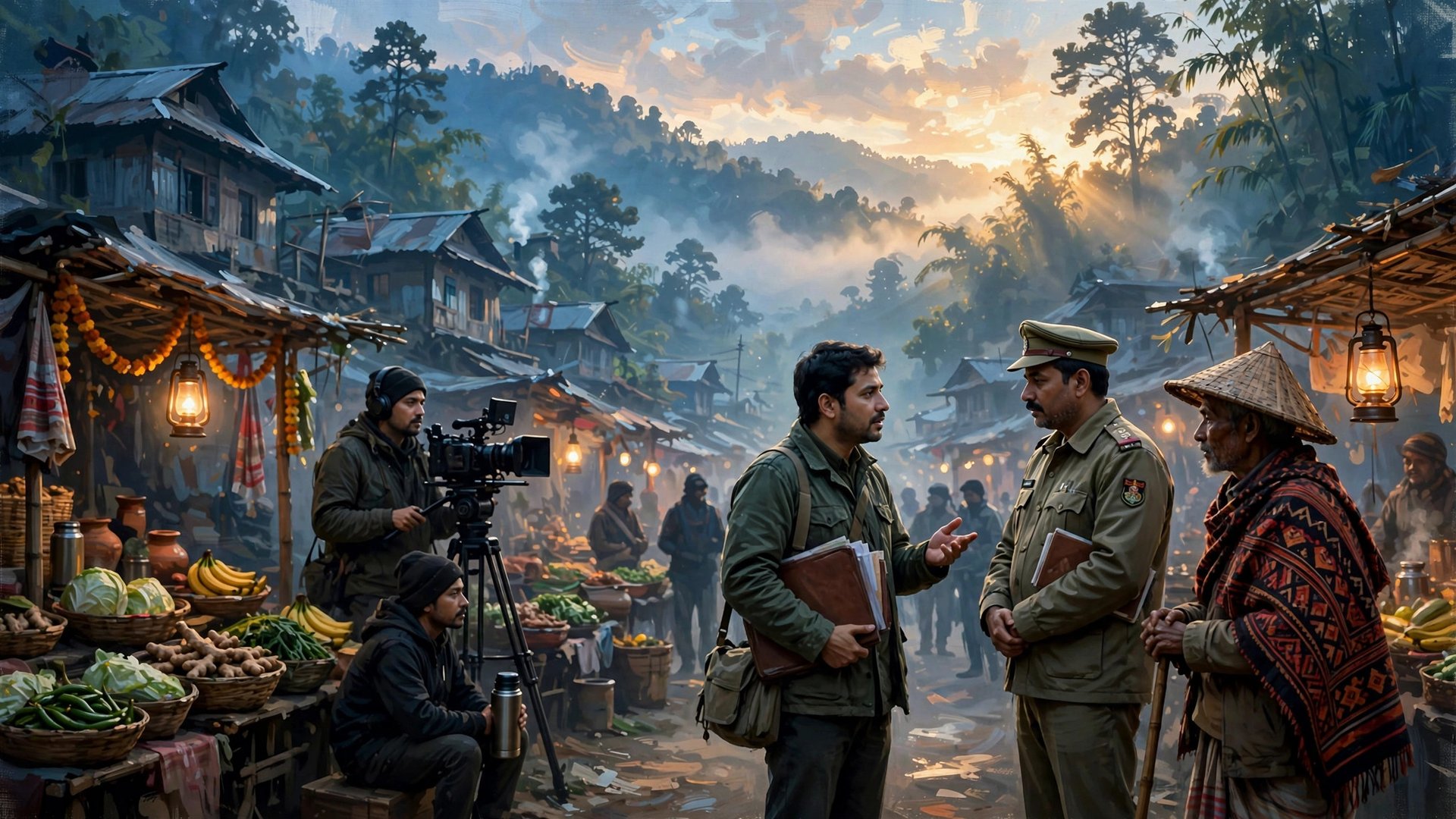
Nothing stops a small shoot faster than a stranger with authority asking one question: who gave you permission to film here? The crew looks at the director. The director looks at the ground. The light is perfect and the day is gone. Most stopped shoots are not stopped by law. They are stopped by missing paperwork, missing courtesy or missing homework. This guide explains how to get permission to shoot a film in India as an indie filmmaker, what actually needs a formal shooting permit and what usually needs only a conversation.
A warning first. This is practical guidance from working filmmakers, not legal advice. Rules vary by state, district and location. A railway station, a forest, a temple and a market each answer to different authorities. When a location matters to your film, check with the authority that controls that place and get the answer in writing. The habit below will keep you safe far more often than any single rule will.
How to get permission to shoot a film in India: start with who owns the place
Every location has someone who can say yes. Find that person before you find your camera angles. The categories below cover almost every indie shoot.
Private property needs the owner’s permission. A house, a shop, a tea garden office, a school building or a private field belongs to someone. Ask that person directly. Put the basics in writing even for a friendly arrangement: the date, the hours, the size of your crew, whether you need power, whether you will move furniture and what you will pay or offer in return. A short written note prevents most arguments. It also protects the owner, who is trusting strangers with their space.
Public places need the authority that manages them. A municipal park answers to the municipality. A market answers to the market committee or the municipal body. A government building answers to the department that runs it. A road answers to the police for traffic and to the local administration for closure. Ask at the office that manages the place, not at the nearest uniformed person on the day. The person on the day can stop you. They usually cannot authorise you.
Streets and crowds need a police intimation in practice. For a small crew shooting handheld without blocking traffic, many cities accept a written intimation to the local police station: who you are, where you will shoot, when you will shoot and how large the crew is. For anything that affects the public, a tripod in a busy footpath, a crowd scene, a vehicle shot or any use of the road, ask the police what they require rather than assuming. Carry a copy of the intimation on set. The paper matters less than the fact that the station already knows your name when someone calls.
Special places need special permission. Archaeological monuments, forests, wildlife areas, railway premises, airports, defence areas and border zones each have their own authority and their own timeline. Apply early. Some of these permissions take weeks. Some are simply refused for small crews without a production company behind them. If a location needs a permission you cannot get in time, change the location. Do not sneak a shoot into a restricted place. A confiscated memory card costs more than a rewritten scene.
Film shooting permission India: the paperwork that actually helps
You do not need a file full of stamps for every shoot. You need a small kit that answers questions fast. Keep it in one folder, physical and digital.
First, a one-page shoot note: the film title, the production name or your own name, the location, the dates, the hours and the crew size. Second, a copy of any permission letter or police intimation. Third, identity cards for the crew. Fourth, a location agreement for private property. Fifth, a simple release form for anyone recognisable who appears on camera and is not part of your cast. At minimum keep a clear note of their consent. That kit resolves most encounters in five minutes.

India also has official film facilitation channels for larger productions, including state film facilitation offices and the national single-window system for feature-scale shoots. A micro-budget short rarely needs that machinery. But if your film grows into a multi-location feature with drone work or road closures, ask the state film office early. They exist to route you to the right departments instead of leaving you to guess.
Fees are the part nobody can quote honestly in a general guide. Some municipalities charge nothing for a small crew. Some heritage sites charge a published fee. Some private owners ask for a day rate. Budget a location line in every shoot plan and confirm the figure with the authority before the shoot day. A fee discovered on the day is a negotiation you will lose.
Shooting permit India film: drones, crowds and other tripwires
Drones deserve their own warning. Drone rules in India are separate from location permission. A location owner saying yes does not authorise a drone flight. Flying in a city, near an airport or near a sensitive installation without the required approvals can end a shoot and create legal trouble far beyond the film. For most indie shoots the honest advice is simple: if you cannot confirm the drone rules for that exact place, shoot the aerial you need another way or cut it. A drone shot is never worth a police case.
Crowd scenes need a second kind of permission: the crowd itself. People in a market or at a festival have not agreed to be in your film by being in public. For wide shots where faces are not identifiable, a general shoot notice and the location authority’s permission usually cover a small crew. For close-ups of identifiable strangers, ask. A short explanation and a smile get you further than a long lens and a hope that nobody notices. If someone objects, respect it and reframe. The footage is not worth the fight.
Children, hospitals, schools and places of worship need extra care. Ask the institution, not just an individual. Keep the crew small. Keep the shoot short. And never film a ritual or a ceremony as background texture without the people involved understanding what you are doing. Respect is not just ethics here. It is logistics. A community that feels used will close its doors to the next filmmaker too.
Sound is a permission issue as well. A location that allows filming may still object to a generator, a loud scene or a night shoot. Neighbours complain about noise, not cameras. Tell the neighbours what will happen and when it will end. A small courtesy visit the day before saves a police visit on the day.
Northeast-specific notes for indie crews
Filming in the Northeast rewards crews that travel lightly and ask early. Distances are long and authorities are often far from the location. A permission that takes a day in a big city can take a week when the office is in another town. Build that time into the schedule. Arrive with printed copies. Mobile signal cannot be trusted to produce a PDF on demand in a remote location.
Community consent matters as much as official permission in village locations. Talk to the village council or the community head before you talk to individual households. Explain the story in plain language. Say where the film will be shown. Listen to what the community does not want filmed. Some places, rituals and stories are not open to outsiders. A refusal is not a negotiation. Accept it with grace and find another way to tell the story.
Border and sensitive areas need particular care. Some districts and routes have restrictions that do not apply elsewhere. Ask the district administration early and do not rely on advice from a previous shoot in a different district. Rules change and the crew that assumed otherwise is the crew that gets turned back at a checkpoint.
Finally, remember that you are a guest in someone else’s home ground. Small crews earn trust by leaving places as they found them, paying local help fairly, crediting local collaborators and sharing the finished film with the community that hosted it. That reputation travels between villages faster than any festival laurel. It is also the most valuable permission a Northeast filmmaker can hold: the permission to come back.
A checklist for your next shoot
One week before, list every location and name the person who can say yes for each one. Get private permissions in writing. File the police intimation for public shoots. Confirm drone rules separately or drop the drone. Confirm fees, power, access and hours. Visit neighbours and community heads where the shoot affects them.
On the day, carry the permission folder, keep the crew size as promised, protect the location and stop the moment an authority asks you to. Arguing on the roadside has never saved a shoot. A calm producer with a folder and a phone number for the authorising office has saved many.
Shooting permission for a short film in India is mostly unglamorous homework. Do it early, do it in writing and do it with courtesy. The reward is simple and precious: a crew that shoots the scene instead of explaining itself, in a place that welcomes them back next time.