
Field note
Directing Non-Actors: How to Get Natural Performances from First-Time Actors
A practical guide to directing non-actors for indie filmmakers in India: casting real people, rehearsing without killing spontaneity and getting honest performances on set.
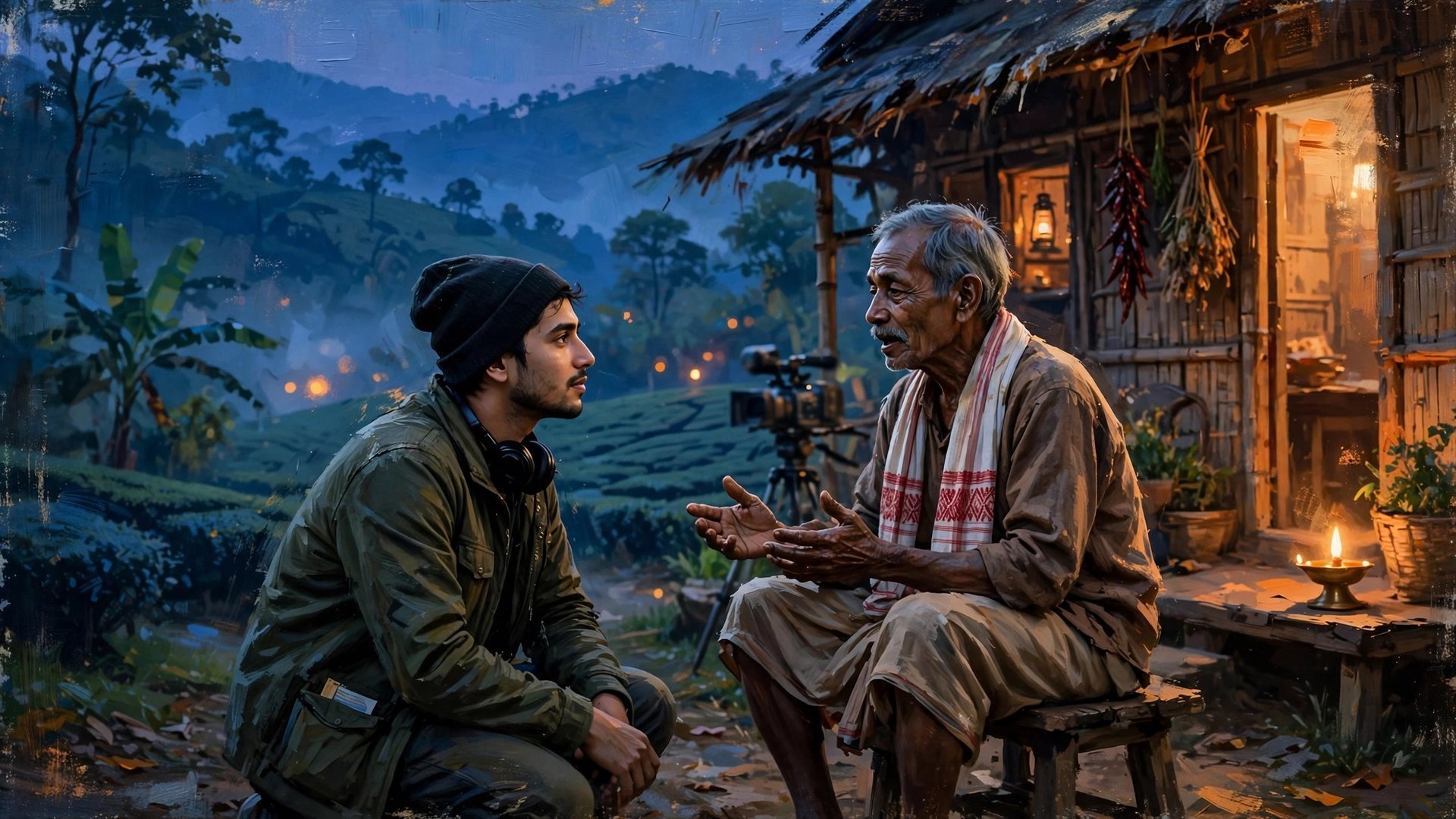
Some of the most honest moments in Indian independent cinema come from people who have never acted before. A farmer who has actually waited for rain does not need to research waiting. A teenager who has actually left home does not need to imagine the leaving. The camera loves that kind of truth. It also exposes every false move a director makes around it. Directing non-actors is not a cheaper version of directing actors. It is a different craft with its own rules.
This guide is for filmmakers working with non professional actors: first-time performers, community members, friends, family and real people cast for who they are rather than for training. It covers casting, rehearsal and on-set direction for a short film or a micro-budget feature in India.
What directing non-actors actually means
A trained actor arrives with technique. They can repeat a performance, hit a mark while crying and adjust a line reading on request. A non-actor arrives with life. They bring a face shaped by real work, a voice shaped by a real place and reactions that have never been rehearsed into smoothness. Your job is to protect the second thing while borrowing just enough of the first.
The biggest mistake is treating a non-actor like a bad actor. Do not hand them a trained actor’s toolkit and then blame them when it does not fit. Do not ask for “more emotion” or “less emotion” as if feeling were a volume knob. Instead, change the situation around them until the true reaction appears on its own. That is the whole method in one sentence: direct the situation, not the feeling.
Casting non actors film: choose the person, not the look
Casting non actors for a film starts long before auditions. Write down what the character has actually lived through, not just how they look. A role that needs ten years of manual labour in the body cannot be faked by a gym routine. A role that needs a specific dialect cannot be coached in a weekend without losing its music.
Meet people where they are. Go to the place the story lives in. Talk first and film later. A casual conversation over tea tells you more than a formal audition ever will. Watch how someone tells a story to a friend. Listen for rhythm, pauses and the way they laugh at themselves. That is the performance you are casting.
When you audition, do not ask for a dramatic monologue. Give them a simple task from the character’s life: mend something, wait for someone, explain a problem to a stranger. Film it on a phone. The test is not whether they can act. The test is whether they stay themselves while a camera watches. Some people freeze the moment they know they are being recorded. That is useful information, not a failure. It tells you how much time and trust the shoot will need.
Cast close to the character’s real age, language and world whenever the story allows it. Every gap between the person and the role is a gap you must fill with direction on a tight schedule. Keep those gaps small. And be honest with the person about what the shoot demands: long days, repeated takes, early mornings and strangers on their street. Consent from a non-actor is not a signature on a form. It is an understanding that survives the third hour of waiting in the rain.
How to direct non actors in rehearsal without killing spontaneity
Rehearsal with non-actors is not about perfecting lines. It is about building trust and familiarity. The person needs to stop performing for you and start behaving with you. That takes time and it takes a room where mistakes are boring rather than embarrassing.

Start without the script. Spend the first meeting on the character’s life, not the film’s dialogue. What does this person do in a normal morning? Who do they answer to? What are they afraid to say out loud? Let them answer in their own words. You are listening for the vocabulary the character would actually use. Often the best line in your film is hiding in that conversation. Write it down with permission and give it back to them as dialogue. They will say it like they own it because they do.
When you do rehearse scenes, rehearse the situation first and the words second. Block the movement: who enters, who waits, who leaves. Let them do it silently a few times. Then add the lines loosely. Allow paraphrase in rehearsal. A non-actor who must hit exact words will spend all their attention on memory and none on listening. Lock the exact wording only when the scene already feels alive in their own phrasing. Then keep the takes short. Long scenes exhaust first-time performers faster than trained ones because every second of pretending costs them more effort.
Never rehearse a performance into the ground. Two or three good passes beat ten tired ones. If a moment worked once in rehearsal, protect it. Change the setup slightly on set so the moment can happen fresh again instead of being repeated from memory. And never let a non-actor watch themselves on a monitor mid-scene and start correcting their own face. The monitor is for you and the cinematographer, not for the performer.
Working with non professional actors on set
On set, your language matters more than your shot list. Trained actors understand notes like “raise the stakes” or “play the subtext”. Non-actors hear jargon and freeze. Speak in verbs and situations. Instead of “be angrier”, try “tell him he cannot come in and mean it”. Instead of “show grief”, try “you just heard the news, you still have to finish this chore”. Give them something to do with their hands. People who are doing something real stop worrying about how they look.
Keep the crew small around a non-actor’s close-up. A crowd of strangers staring in silence is the fastest way to kill a natural performance. Clear the set of everyone who does not need to be there. Let the sound recordist and the camera operator become familiar faces before the emotional scene, not strangers who appear for the hardest moment of the day.
Shoot the wide shots and the easy material first. Let the person learn the strange rhythm of a film set on scenes that cost little emotionally. Save the hardest scene for the second half of the day when trust exists. And when a take goes well, move on. Chasing a slightly better version of an honest moment usually destroys the honest moment. Two good takes are wealth. Five takes are a tax on everyone.
Continuity is your problem, not theirs. Do not make a non-actor responsible for remembering which hand held the cup. That is what your script supervisor and your own notes are for. Free their attention for listening and reacting. The same goes for marks on the floor. If a mark matters for focus, hide it in the scene: a stone, a doorway, a chair. Let them walk to a real thing rather than to a piece of tape.
The hard parts nobody warns you about
First, emotion on demand is unfair to ask of someone who has never done it. If a scene needs tears, earn them through the situation or accept a quieter truth. A person holding back tears often reads more powerfully on camera than a person forcing them. Do not push a non-actor into real distress for your film. The scene is not worth a wound you cannot undo after wrap.
Second, language and dialect need care. A non-actor speaking a language that is not their first will sound careful instead of alive. Cast in the language the person dreams in when the story allows it. Subtitles exist for the audience. The performance exists for the truth.
Third, time is a directing tool. Non-actors often need longer to warm up and shorter bursts of intensity. Plan your schedule around that instead of around a standard call sheet. A half day with a rested first-time performer beats a full day with an exhausted one.
Fourth, protect them after the shoot. A non-actor goes home to the same street where you filmed. Neighbours will comment. Family will ask questions. Show them the finished scene before anyone else sees it. Explain where the film will play. Keep your promises about credit and payment. The way you treat a first-time performer is the reputation your next film will inherit in that community.
A simple workflow for your next short film
Cast from real life, not from headshots alone. Rehearse situations before words. Keep the crew small for intimate scenes. Direct with verbs and tasks instead of emotional labels. Shoot easy material first and hard material second. Stop when a moment is honest instead of chasing perfection. Look after the person after wrap with the same care you showed before it.
Directing non-actors well is one of the fastest ways to make a small film feel large. It costs no money. It costs attention, patience and respect. Those are the currencies independent filmmakers actually have. Spend them on the people in front of your camera and the camera will return something no budget can buy: a face that the audience believes without being asked to.